I used to roll my eyes when someone told me they’ve been using Canva. But since the AI poster abomination trend, maybe I should have been a bit more forgiving!
I am starting to realise that the tools are not the issue, the problem happens when design is treated as something quick, easy and disposable.
Tools vs thinking
We’ve (and I include myself in that) ended up judging design by the software used to create it.
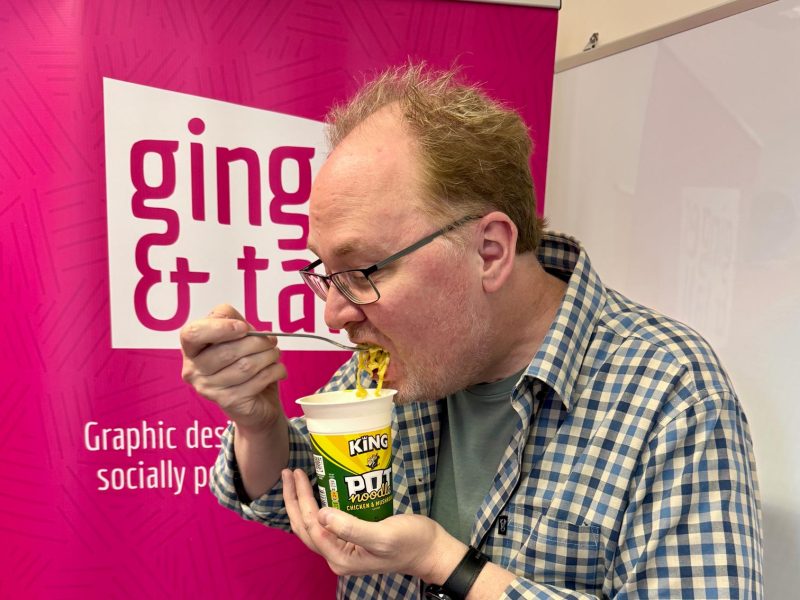
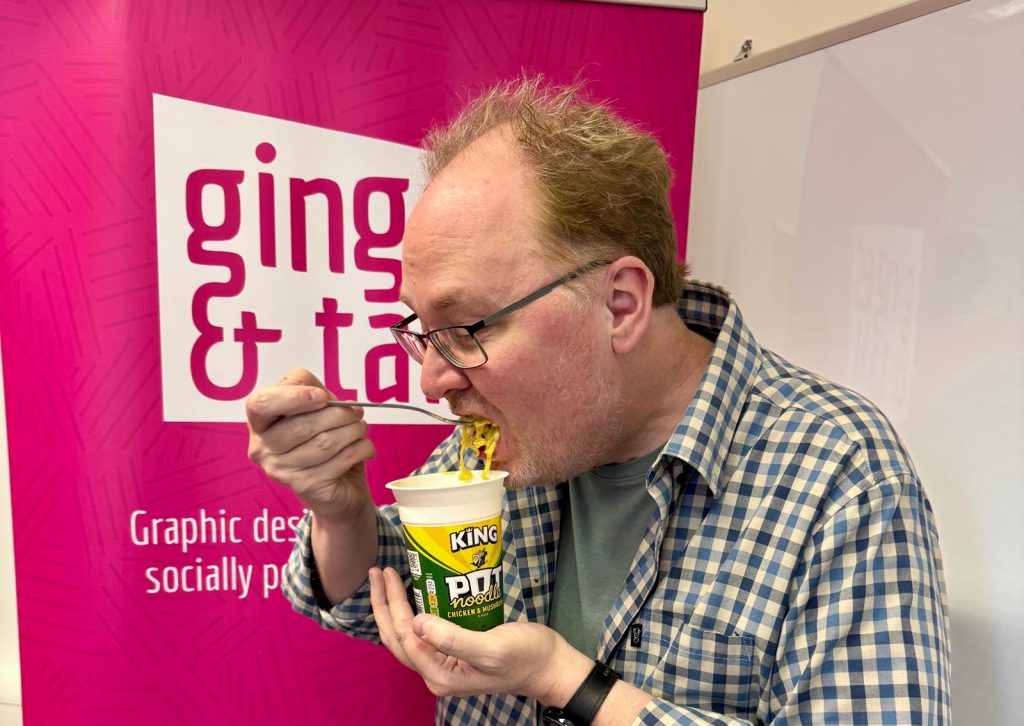
Giving me access to a high-tech commercial kitchen won’t improve my Pot Noodle supper (NOW you get the photo!). Using Canva doesn’t make you a designer but understanding design does.
That understanding is more than how something looks, it’s about knowing what needs to be communicated, what can be left out, what someone should notice first, and how everything works together so it feels consistent. And that is what we do at Ginger and Tall – strategic thinking combined with a lot of design experience.
Why this is even more important for charities
Small teams, tight budgets, and a constant demand for content have meant Canva is an obvious quick fix. Or worse still, people are asking ChatGPT and its pals. It’s accessible, cheap, quick, and useful. But things start to deteriorate when lots of different people within the same charity are producing marketing materials from scratch, under pressure.
You start to see inconsistencies in colours, fonts and branding. Layouts get squashed to fit, and the messages are lost. Although none of it feels like a big issue on its own, over time it adds up. Consistency is lost and that’s the bit that builds recognition and trust.
Where Canva does work
Canva is at its best when it’s used as a tool to deliver something that’s already been thought through. It works brilliantly for supporter-led content, where you want lots of people to be able to engage and create their own materials. But for that to work well, it needs to be set up properly first.
If you get it wrong, everything starts to look flat, generic, and you get that niggly feeling you’ve seen it before (you probably have).
Time and money
There’s also a common belief that Canva saves time and money. And in the short term, it often does, but without that initial thinking, teams can end up spending more time fixing, tweaking and reworking things later on.
Canva is still a good tool
Canva shouldn’t be avoided but you need to understand its role in your marketing and use it properly.
Good charity graphic design comes down to thinking, rather than tools. Canva, Adobe, PowerPoint… they’re just ways of getting there.
Put the right thinking in place at the start because that’s where most of the value sits.
Get in touch for a chat
If you’re a charity or purpose-driven organisation looking for reliable and experienced graphic design support, we’re always happy to have a chat. Ginger and Tall is based in Swansea and we have clients across Wales and the UK.
We’ll save you lots of hassle and time.